Friday, September 20, 2013

Monday, September 16, 2013
Phelps Mountain, September 14, 2013 - Trip Report
Ten of us started from the Adirondack Loj at 8:45 A.M. The lead bunch were back at the Loj at 4:00 P.M. I was the slowest and didn't make it back until 6:00 P.M. When we were going up the steep, rocky parts of the trail, I was worried about how I was going to be able to come down, but coming down was easier than going up. The mountains were very misty/cloudy which obscured much of the view from the top. We could not see Mt. Marcy for example. As we approached the top, it seemed that some flora looked alpine, and I regret that I didn't take pictures. The clarity of the water in Phelps Creek was startling.
Phelps Mountain is rated as moderate hike. I'd hate to experience what a difficult hike is like. While I would climb Cascade Mountain again, for example, I have no intention of ever climbing Phelps again.
Phelps Mountain is rated as moderate hike. I'd hate to experience what a difficult hike is like. While I would climb Cascade Mountain again, for example, I have no intention of ever climbing Phelps again.
Lessons Learned: On this hike, my undershirt was made of synthetic fiber. But I wore a cotton t-shirt over that, and a cotton-hooded sweatshirt over that. On the summit, we were resting and exposed to the wind, which was blowing through to my skin--all of which was mostly wet from sweat anyway. To protect myself, I threw on my jacket as well. The inside of the rain jacket got soaking wet as well. Kelly (a member of our hiking group) told me that all of my layers should be synthetic. Since we go right from the trail head to the pub in Lake Placid, the next time we go hiking, I am going to have put post-hike clothes in the car trunk, so I don't hypothermia in the pub.
Sample Photos From the Hike:


Sunday, August 11, 2013
It's About More Than Just Hiking!
The more we take our own selves and our actions seriously, the more we perceive the mysteriousness and also the urgency of these questions, the fact that we cannot really avoid them’, they are necessarily at the root of everything we do. This is because it is the nature of the human being to expect something, to look for fulfillment in everything he does. And where is the limit to this desire to be fulfilled? There is no limit. It is unlimited. Every achievement, every possession opens up on a further possibility, a depth that remains to be explored, a sense of incompleteness, a yearning for more. We are like hikers in the mountains (an analogy Giussani is fond of): we see a peak and we climb to the top. When we arrive there, we have a new view, and in the distance we see a higher peak promising a still greater vista.
- Paul A. Zalonski
- Paul A. Zalonski
Tuesday, April 30, 2013
The Mountains Await Us
Yesterday, on my cell phone, I got this message from Ed:
Fellow hikers - just wanted to share one of my efforts to enjoy hiking more. I started stretching for 15 minutes after my morning walk and I am feeling so much better. Hopefully this will allow me to enjoy hiking more. The mountains await us.
Wednesday, February 27, 2013
Book Review: Ascent. The Invention of Mountain Climbing and It's Practice, by Jeremy Bernstein
An English mountain climber named George Mallory was once asked by a New York Times reporter why he wanted to climb Mount Everest, and George replied with the now cliched, "Because it's there." Jeremy Bernstein is the author of a book called, Ascent. The Invention of Mountain Climbing and It's Practice. To the question of, why climb? Professor Bernstein offers his own philosophical reply. "No doubt climbing is somewhat crazy, but there is a profound satisfaction in conquering one's deepest fears, a sort of spirited satisfaction which in this age of televised and predigested experience is all but disappearing." He said that in 1965. Today, so many of us spend most of our days in our own private sensory chambers, with only electronic images of life, reality and experience being piped into our eyes and ears.
Jeremy Bernstein was a professor of Physics at Stevens Institute of Technology where I was an undergraduate in the mid-1970's. In my senior year, I took a humanities class from him on the history of modern science, which was centered on the thought of Albert Einstein. Apparently, professor Bernstein spent his summers climbing mountains all over the world. Besides this book, he has written two other books related to mountain climbing, Mountain Passages and In the Himalayas.
This past September, several of us hiked to the top of two of the Adirondack High Peaks--Cascade and Porter Mountains (each 4,000+ feet). It was out of beginner's enthusiasm that I read Ascent, and it has stoked my enthusiasm even more.
Apparently, mountain climbing originated in the French Alps, in the Chamonix Valley. Part I of Bernstein's book is about the origins and past history of Alpine mountain climbing. It satisfies a curiosity but the quantity of detail becomes somewhat dull rather quickly. I imagine it might not be so for someone who has done some serious mountain climbing. Part II of Ascent is about Bernstein's own experience in climbing the Alps, and I found it consistently engaging. I especially liked his portraits of the various guides, wives, and legendary personalities associated with Alpine climbing.
Readers may be aware of some of the Alpine geographic names: Mont Blanc (15,000+ feet), the Matterhorn (14,000+ feet.), perhaps the aiguilles (French for needles), like the Aiguilles de Midi (12,000+ feet), or Les Drus (12,00+ feet). The weather in the mountains is extreme and changes constantly. Winds can be 60-100 miles an hour. Hikers fall or get blown off the sides of mountains. Others collapse from exhaustion and die of exposure.What was solid ice in the morning often melts in the afternoon sun. Avalanches and falling rocks are real, and potentially lethal threats. Almost all the serious Alpine hikes involve crossing or climbing a glacier at some point. Especially on glaciers, there is the risk of falling through snow covered crevices. The value of a licensed guide is that they have the experience and judgment to be able to minimize these risks.
In Ascent, there are few women guides or daring climbers, but Bernstein says that there is no reason why there shouldn't be. "Climbing, and especially rock climbing is not a question of brute strength; balance, agility and nerve count for a lot more." Personally, I sense that men tend to feel the need to prove themselves physically in a way that most women don't.
I was surprised at the risk and level of difficulty that professor Bernstein attempts. After all, for his day job, he was a college professor, writer and editor. Why put your life and limb at risk? But he caught the climbing bug early, at age 10, while staying in the Alps. He has climbed several of the needles. Just before receiving his Phd at Harvard (1955, the year I was born), he and a friend risked expulsion from the school by climbing to the top of Memorial Hall, and then down again, in the middle of the night. Is this courage or foolishness? What puzzles me is that the only mention he makes of training for any of the climbs is doing some hard walking in the weeks before. He does admit to being exhausted after a day's hike in the mountains. The guides themselves are the epitome of physical fitness, but that can be a problem because some of the guides travel very fast and are therefore hard to keep up with.
In the Alps, the number and frequency of accidents and deaths is shocking. Most occur with inexperienced hikers who don't hire guides. For hikers that are led by licensed guides, accidents and deaths are rare. In the Alps, extensive personnel, training, equipment, and communication systems are dedicated to rescues. In the summer the Alps are packed with hikers, and rescue operations go on almost continuously. Most of the serious, more risky rescues are done by the licensed guides themselves. Bernstein's descriptions of rescues are thrilling. He also chronicles the most famous and perhaps most risky rescues in Alpine history, which was led by a legendary American mountain climber named Gary Hemming.
The use of ropes, ladders, pitons, ice axes, and so forth is referred to as artificial climbing. I don't plan on doing any artificial climbing--no rappelling, no climbing of vertical rock walls, and no climbing any mountains as high or as dangerous as the Alps. Besides being an interesting, at times, thrilling read, the book has put enough fear into me to make sure that I put emphasis on safety. But coward that I am, having read Ascent, I am motivated to do more than I otherwise would have. Do we need an excuse to experience the beauty of the mountains?
Jeremy Bernstein was a professor of Physics at Stevens Institute of Technology where I was an undergraduate in the mid-1970's. In my senior year, I took a humanities class from him on the history of modern science, which was centered on the thought of Albert Einstein. Apparently, professor Bernstein spent his summers climbing mountains all over the world. Besides this book, he has written two other books related to mountain climbing, Mountain Passages and In the Himalayas.
This past September, several of us hiked to the top of two of the Adirondack High Peaks--Cascade and Porter Mountains (each 4,000+ feet). It was out of beginner's enthusiasm that I read Ascent, and it has stoked my enthusiasm even more.
Apparently, mountain climbing originated in the French Alps, in the Chamonix Valley. Part I of Bernstein's book is about the origins and past history of Alpine mountain climbing. It satisfies a curiosity but the quantity of detail becomes somewhat dull rather quickly. I imagine it might not be so for someone who has done some serious mountain climbing. Part II of Ascent is about Bernstein's own experience in climbing the Alps, and I found it consistently engaging. I especially liked his portraits of the various guides, wives, and legendary personalities associated with Alpine climbing.
Readers may be aware of some of the Alpine geographic names: Mont Blanc (15,000+ feet), the Matterhorn (14,000+ feet.), perhaps the aiguilles (French for needles), like the Aiguilles de Midi (12,000+ feet), or Les Drus (12,00+ feet). The weather in the mountains is extreme and changes constantly. Winds can be 60-100 miles an hour. Hikers fall or get blown off the sides of mountains. Others collapse from exhaustion and die of exposure.What was solid ice in the morning often melts in the afternoon sun. Avalanches and falling rocks are real, and potentially lethal threats. Almost all the serious Alpine hikes involve crossing or climbing a glacier at some point. Especially on glaciers, there is the risk of falling through snow covered crevices. The value of a licensed guide is that they have the experience and judgment to be able to minimize these risks.
In Ascent, there are few women guides or daring climbers, but Bernstein says that there is no reason why there shouldn't be. "Climbing, and especially rock climbing is not a question of brute strength; balance, agility and nerve count for a lot more." Personally, I sense that men tend to feel the need to prove themselves physically in a way that most women don't.
I was surprised at the risk and level of difficulty that professor Bernstein attempts. After all, for his day job, he was a college professor, writer and editor. Why put your life and limb at risk? But he caught the climbing bug early, at age 10, while staying in the Alps. He has climbed several of the needles. Just before receiving his Phd at Harvard (1955, the year I was born), he and a friend risked expulsion from the school by climbing to the top of Memorial Hall, and then down again, in the middle of the night. Is this courage or foolishness? What puzzles me is that the only mention he makes of training for any of the climbs is doing some hard walking in the weeks before. He does admit to being exhausted after a day's hike in the mountains. The guides themselves are the epitome of physical fitness, but that can be a problem because some of the guides travel very fast and are therefore hard to keep up with.
In the Alps, the number and frequency of accidents and deaths is shocking. Most occur with inexperienced hikers who don't hire guides. For hikers that are led by licensed guides, accidents and deaths are rare. In the Alps, extensive personnel, training, equipment, and communication systems are dedicated to rescues. In the summer the Alps are packed with hikers, and rescue operations go on almost continuously. Most of the serious, more risky rescues are done by the licensed guides themselves. Bernstein's descriptions of rescues are thrilling. He also chronicles the most famous and perhaps most risky rescues in Alpine history, which was led by a legendary American mountain climber named Gary Hemming.
The use of ropes, ladders, pitons, ice axes, and so forth is referred to as artificial climbing. I don't plan on doing any artificial climbing--no rappelling, no climbing of vertical rock walls, and no climbing any mountains as high or as dangerous as the Alps. Besides being an interesting, at times, thrilling read, the book has put enough fear into me to make sure that I put emphasis on safety. But coward that I am, having read Ascent, I am motivated to do more than I otherwise would have. Do we need an excuse to experience the beauty of the mountains?
Monday, February 25, 2013
The Adirondacks - A Primer for Outdoorsmen
In 1980, Sports illustrated published an excellent article about the Adirondack region called, No Landscape More Brightly Gemmed, by Robert H. Boyle. It is a natural history of the region from the perspective of an outdoorsman, concluding with an description of the impact of acid rain.
Boyle says that the Iroquois considered the Adirondacks a barren region. The word Adirondack is an Iroquois word meaning bark eaters. According to Wikipedia, before the arrival of the White Man, the Adirondacks were occupied by the Algonquin, with the Iroquois to the west.
My current interest in the Adirondacks is hiking. This past September with several family members we climbed Cascade and Porter Mountain. The upper part of Cascade is almost all smooth rock. As the wooded part of the trail ends, it leads up a steep rock face. As I gazed upward at the rock face, I saw a long gust of wind blow down the rock face from the top. The reason I "saw it" was that the wind was saturated with mist. It was enchanting, like seeing a waterfall in the air, like something from a fairy tale.
Boyle says, "The park contains 42 mountains higher than 4,000 feet, 11 of them with Alpine summits harboring plants not otherwise found south of Labrador..." According to Wikipedia, "Atop the highest peaks, above the tree line, there is a total of 87 acres (35 ha) of extraordinarily fragile alpine ecosystem; the amount of this ecosystem is constantly changing due to variation in the climate from year to year." Last September, when we hiked Cascade Mountain. The first thing that comes to mind when I recall the hike, apart from the exhaustion, was the very noticeable change in vegetation to Alpine at the higher elevations. As I approached the top, the evergreen trees took on a lighter shade of green, and the pine needles and bark had a much rougher, weather beaten look. Lichen grew on most of the trees and many of the rocks.
The upper part of Cascade is almost all rock, but on the level spots and in crevices, the vegetation is alpine. One spot had a sign asking hikers to not disturb that particular area stating that it was an alpine habitat and that the ecosystem was very fragile.
The SI article mentions the absence of Moose in the Adirondacks; however, there are now about a thousand Moose in the region. See Adirondack Moose Whisperer Speaks.
In the weeks after we climbed Cascade and Port mountains, I was enthused enough to read, The Last of the Mohicans, by James Fenimore Cooper. It is centered in the area around Lake George. In the novel, Lake George and the valley it sits in is called Horicon. The Deer Slayer is a more sophisticated novel, but The Last of the Mohicans is more entertaining. Of course, there's always the film, The Last of the Mohicans (1992), starring Daniel Day-Lewis. The fort in the story is Fort William Henry which has been preserved as a museum in the village of Lake George. The waterfall, behind which the protagonists hide, is how the city of Glens Falls got it name. The various springs in the area are also in the story.
Boyle says that the Iroquois considered the Adirondacks a barren region. The word Adirondack is an Iroquois word meaning bark eaters. According to Wikipedia, before the arrival of the White Man, the Adirondacks were occupied by the Algonquin, with the Iroquois to the west.
My current interest in the Adirondacks is hiking. This past September with several family members we climbed Cascade and Porter Mountain. The upper part of Cascade is almost all smooth rock. As the wooded part of the trail ends, it leads up a steep rock face. As I gazed upward at the rock face, I saw a long gust of wind blow down the rock face from the top. The reason I "saw it" was that the wind was saturated with mist. It was enchanting, like seeing a waterfall in the air, like something from a fairy tale.
Boyle says, "The park contains 42 mountains higher than 4,000 feet, 11 of them with Alpine summits harboring plants not otherwise found south of Labrador..." According to Wikipedia, "Atop the highest peaks, above the tree line, there is a total of 87 acres (35 ha) of extraordinarily fragile alpine ecosystem; the amount of this ecosystem is constantly changing due to variation in the climate from year to year." Last September, when we hiked Cascade Mountain. The first thing that comes to mind when I recall the hike, apart from the exhaustion, was the very noticeable change in vegetation to Alpine at the higher elevations. As I approached the top, the evergreen trees took on a lighter shade of green, and the pine needles and bark had a much rougher, weather beaten look. Lichen grew on most of the trees and many of the rocks.
The upper part of Cascade is almost all rock, but on the level spots and in crevices, the vegetation is alpine. One spot had a sign asking hikers to not disturb that particular area stating that it was an alpine habitat and that the ecosystem was very fragile.
The SI article mentions the absence of Moose in the Adirondacks; however, there are now about a thousand Moose in the region. See Adirondack Moose Whisperer Speaks.
In the weeks after we climbed Cascade and Port mountains, I was enthused enough to read, The Last of the Mohicans, by James Fenimore Cooper. It is centered in the area around Lake George. In the novel, Lake George and the valley it sits in is called Horicon. The Deer Slayer is a more sophisticated novel, but The Last of the Mohicans is more entertaining. Of course, there's always the film, The Last of the Mohicans (1992), starring Daniel Day-Lewis. The fort in the story is Fort William Henry which has been preserved as a museum in the village of Lake George. The waterfall, behind which the protagonists hide, is how the city of Glens Falls got it name. The various springs in the area are also in the story.
Saturday, September 29, 2012
Hiking Cascade and Porter Mountains--Trip Report
The hike was a challenge--It was too much, but I'm happy that I completed it. On Saturday, September 15, 2012, six of us hiked to the top of Porter and then Cascade Mountain. We started hiking at 10:00 A.M. and were back at our cars at 04:00 P.M. We had six in our party: myself, Ed, Hank, Laura, Elizabeth, and Steve S, plus 2 golden retrievers. The weather was overcast and cool. It had rained hard the night before, and the trees, and ground were wet, but there was almost no rain when we hiked. Most of the trail was over big rocks, and the few parts that were not were either mud or mud puddles. Both legs were in pain by the end, but at least now I can say that I climbed two of the high peaks.

Several hours after we started hiking, family friend Timothy W. who lives in Lake Placid came looking for us, and found us somewhere between Porter and Cascade. Timothy is a regular hiker and skier. He went to the top of Cascade with us, and for him, it was like an afternoon stroll in the park.
Until I had started preparing for this hike, I had never worn a backpack before. I had been worried about wearing a weighted backpack all day, but it turned out, the weight of the backpack was non-issue. The biggest issue was the weight of me.

Going up was a cardiovascular workout. I paced myself to make sure I had enough energy to finish. Coming down was difficult on the leg muscles. I slipped and fell about half a dozen times. I pulled a muscle slightly in my left quadriceps, and on one fall. I seriously bruised my left thigh on a rock.
Far up the main trail, it forks. To the left was the way to Porter and to the right, Cascade. While descending from Porter, I seriously considered skipping the climb to the peak Cascade, but the climb to the top of Cascade from that point was less than half of the climb to the top of Porter, and my feet just kept going. The walk between Porter and Cascade is along a ridge-line and is more horizontal than vertical.
On the descent from Porter, Ed and I unknowingly took a side trail by accident and arrived at a rock outcropping that had a magnificent view. A few other hikers were there also, taking photos. Luckily, they knew the way back to the main trail because we sure didn't.

At the higher elevation levels, most of the trees along the trail were covered with lichen and more than one kind. One of the of lichens was usnea (usnea barbata I think), also known as, "old man's beard." I remembered reading as a kid that American Indians used it for an antibiotics. It only grows under certain specific conditions.
The approach to the peak of Cascade involved climbing on several sheer rock faces. Just before climbing one of the sheer rock areas, I was in awe as I watched the wind, blow mist over the rock formation, right in front of me. Two or three times, I crawled on all fours. There was only one spot near the summit that was tricky. Just beneath the summit of Cascade but still on the sheer rock part, there was a plateau with green grasses and lichen growing. A sign asked people to stay away from the area. The sign said that it was an alpine eco-system that they were trying to revive.
The view from the top of Cascade was fantastic, better than advertised, better than photos. For 360 degrees, all you see are other mountains and wilderness. I felt slightly phobic at the top--a fear of heights, a fear of falling. Under high winds, a person could easily slip or get blown off the top. It would also be a dangerous place to be in a lightening storm.
On the trail, I noticed that the experienced hikers used hiking poles. Previously, I assumed that hiking poles were something that the hiking shops sold for high profit margins to unwitting city slickers. But apparently, when going down hill, they take some of the load off the thigh muscles and help prevent falls as well. I saw Timothy W. use them to vault the tricky spot on the rock face.
I wore a pair of Colombia hiking sneakers that I bought from Dick's Sporting Goods for $50.00. They have excellent foot support and traction. After six hours of hiking, even though my legs were in pain, I was amazed that my feet and ankles did not hurt.

In the last hour of the hike, I kept meeting hikers who were on their way up. I warned each one to make sure that they are off the mountain before dark--which happened around 07:00+ P.M. but it is darker in the mountains sooner because of the trees blocking the sun.
Overall, the hike was humbling, an exercise in limits, risk, planning, and learning not to underestimate Mother Nature. Cascade and Porter are the shortest and easiest of the forty-six high peaks to climb. I now realize that climbing all forty-six peaks will be a much greater challenge than I previously expected. I am not sure if I can do it, but I am looking forward to attempting the next mountain. The spirit is willing, but the body is weak, grossly overweight and out of shape.
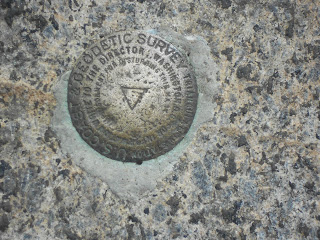
Lessons learned:
Wear or bring a hat or something with a hood. Otherwise, your head will be very cold from sweat. At the last second, I took a baseball hat from brother Ed's trunk, and it was just enough to keep my head warm. Bring extra clothing. The two cotton shirts that I wore got completely soaked in sweat after about 15 minutes and stayed that way for the rest of the hike. Only the raincoat prevented me from getting serious hypothermia. Under the raincoat, I was soaking wet for 6 hours. Only the fact that I was moving and wearing a backpack kept me warm. Once on the peak and exposed to the wind, I was shivering.
Do not wear cotton next to the skin. It retains water. Wear wool or synthetics.
Drink water regularly even if you do not feel thirsty. I only drank 2 or 3 three bottles of water, and I believe I was dehydrated by the end.
Bring more food than you think you will need--trail mix, dried fruit, buttered rolls--anything with carbohydrates. Al I had was a buttered roll that I bought at the last minute from the Stewarts in Brant Lake. Luckily, when were were on the peaks, Ed gave me some of his trail mix. The M&Ms in the trail mix were a nice touch (a tip of the hat to Ed's wife Cindy).
When walking/climbing, develop a habit of putting your whole foot on the ground whenever possible. Make sure you are balanced before shifting your weight and planting the next foot. Do not step with just your toes or heels alone unless you have no other choice.
You can easily get lost even using well-marked trails. Keep your head about you.
Bring a whistle and a flashlight.
Time your hike so that you will be off the mountain well before dark. Give yourself a large margin of error.
Some links about Porter and Cascade Mountains:
Cascade & Porter Mountains (#15 & #16)
Cascade Mountain and Porter Mountain, Adirondack Day Hike
Cascade Mountain, by Dr. Stewart N. Delman, DDS
Cascade Mountain


Stephen M. Bauer

Several hours after we started hiking, family friend Timothy W. who lives in Lake Placid came looking for us, and found us somewhere between Porter and Cascade. Timothy is a regular hiker and skier. He went to the top of Cascade with us, and for him, it was like an afternoon stroll in the park.
Until I had started preparing for this hike, I had never worn a backpack before. I had been worried about wearing a weighted backpack all day, but it turned out, the weight of the backpack was non-issue. The biggest issue was the weight of me.

Going up was a cardiovascular workout. I paced myself to make sure I had enough energy to finish. Coming down was difficult on the leg muscles. I slipped and fell about half a dozen times. I pulled a muscle slightly in my left quadriceps, and on one fall. I seriously bruised my left thigh on a rock.
Far up the main trail, it forks. To the left was the way to Porter and to the right, Cascade. While descending from Porter, I seriously considered skipping the climb to the peak Cascade, but the climb to the top of Cascade from that point was less than half of the climb to the top of Porter, and my feet just kept going. The walk between Porter and Cascade is along a ridge-line and is more horizontal than vertical.
On the descent from Porter, Ed and I unknowingly took a side trail by accident and arrived at a rock outcropping that had a magnificent view. A few other hikers were there also, taking photos. Luckily, they knew the way back to the main trail because we sure didn't.

The approach to the peak of Cascade involved climbing on several sheer rock faces. Just before climbing one of the sheer rock areas, I was in awe as I watched the wind, blow mist over the rock formation, right in front of me. Two or three times, I crawled on all fours. There was only one spot near the summit that was tricky. Just beneath the summit of Cascade but still on the sheer rock part, there was a plateau with green grasses and lichen growing. A sign asked people to stay away from the area. The sign said that it was an alpine eco-system that they were trying to revive.
The view from the top of Cascade was fantastic, better than advertised, better than photos. For 360 degrees, all you see are other mountains and wilderness. I felt slightly phobic at the top--a fear of heights, a fear of falling. Under high winds, a person could easily slip or get blown off the top. It would also be a dangerous place to be in a lightening storm.

On the trail, I noticed that the experienced hikers used hiking poles. Previously, I assumed that hiking poles were something that the hiking shops sold for high profit margins to unwitting city slickers. But apparently, when going down hill, they take some of the load off the thigh muscles and help prevent falls as well. I saw Timothy W. use them to vault the tricky spot on the rock face.
I wore a pair of Colombia hiking sneakers that I bought from Dick's Sporting Goods for $50.00. They have excellent foot support and traction. After six hours of hiking, even though my legs were in pain, I was amazed that my feet and ankles did not hurt.

In the last hour of the hike, I kept meeting hikers who were on their way up. I warned each one to make sure that they are off the mountain before dark--which happened around 07:00+ P.M. but it is darker in the mountains sooner because of the trees blocking the sun.
Overall, the hike was humbling, an exercise in limits, risk, planning, and learning not to underestimate Mother Nature. Cascade and Porter are the shortest and easiest of the forty-six high peaks to climb. I now realize that climbing all forty-six peaks will be a much greater challenge than I previously expected. I am not sure if I can do it, but I am looking forward to attempting the next mountain. The spirit is willing, but the body is weak, grossly overweight and out of shape.

Lessons learned:
Wear or bring a hat or something with a hood. Otherwise, your head will be very cold from sweat. At the last second, I took a baseball hat from brother Ed's trunk, and it was just enough to keep my head warm. Bring extra clothing. The two cotton shirts that I wore got completely soaked in sweat after about 15 minutes and stayed that way for the rest of the hike. Only the raincoat prevented me from getting serious hypothermia. Under the raincoat, I was soaking wet for 6 hours. Only the fact that I was moving and wearing a backpack kept me warm. Once on the peak and exposed to the wind, I was shivering.
Do not wear cotton next to the skin. It retains water. Wear wool or synthetics.
Drink water regularly even if you do not feel thirsty. I only drank 2 or 3 three bottles of water, and I believe I was dehydrated by the end.
Bring more food than you think you will need--trail mix, dried fruit, buttered rolls--anything with carbohydrates. Al I had was a buttered roll that I bought at the last minute from the Stewarts in Brant Lake. Luckily, when were were on the peaks, Ed gave me some of his trail mix. The M&Ms in the trail mix were a nice touch (a tip of the hat to Ed's wife Cindy).
When walking/climbing, develop a habit of putting your whole foot on the ground whenever possible. Make sure you are balanced before shifting your weight and planting the next foot. Do not step with just your toes or heels alone unless you have no other choice.
You can easily get lost even using well-marked trails. Keep your head about you.
Bring a whistle and a flashlight.
Time your hike so that you will be off the mountain well before dark. Give yourself a large margin of error.
Some links about Porter and Cascade Mountains:
Cascade & Porter Mountains (#15 & #16)
Cascade Mountain and Porter Mountain, Adirondack Day Hike
Cascade Mountain, by Dr. Stewart N. Delman, DDS
Cascade Mountain


Subscribe to:
Posts (Atom)